Systems
CVS agrees to $315 million opioid dispensing settlement
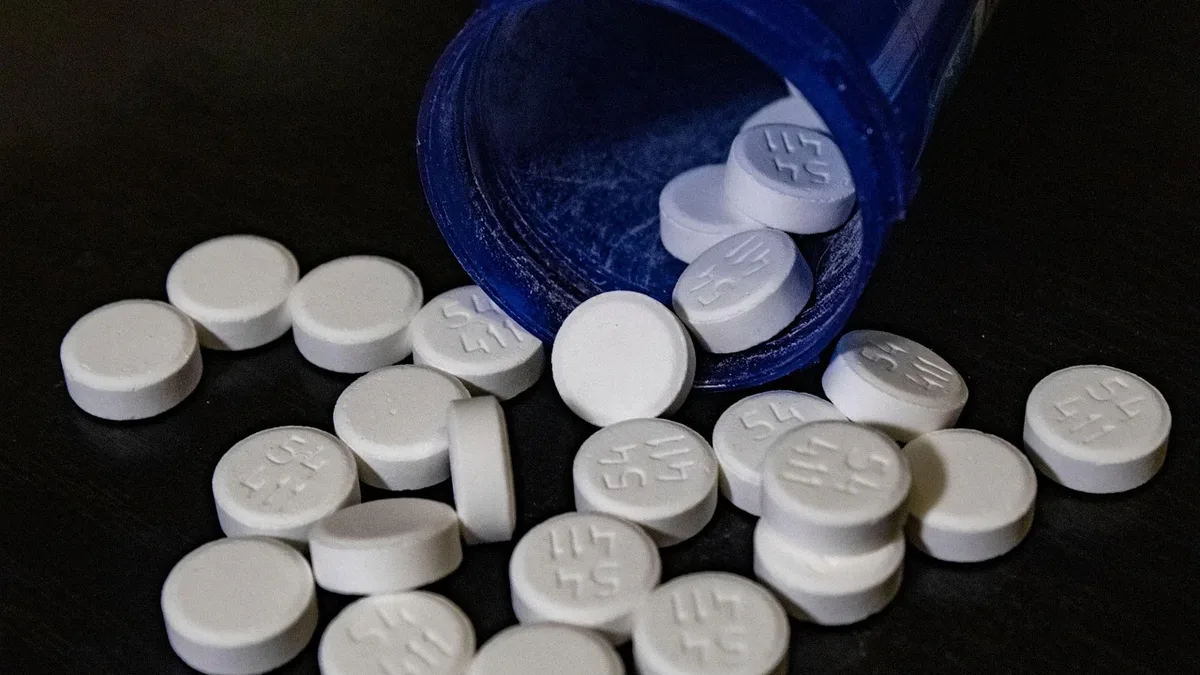
CVS Pharmacy will pay $315 million to settle a 2024 Justice Department lawsuit alleging it unlawfully dispensed opioids, prioritizing profit over safety.
CVS Pharmacy will pay $315 million to settle a 2024 Justice Department lawsuit alleging it unlawfully dispensed opioids, prioritizing profit over safety.
The FDA has approved Weltruza, the first once-monthly subcutaneous long-acting injectable olanzapine for adults with schizophrenia, available in three strengths without loading doses.
Research in mice suggests a brain protein's decline accelerates aging, while a separate trial explores accelerated magnetic stimulation for methamphetamine use disorder.

A major government-commissioned review finds the steep increase in anxiety and depression among young people in England is real, driven by social pressures and overwhelmed services, and rejects claims of widespread overdiagnosis.
The 2026 Nobel Prize in Physiology or Medicine was awarded to Karl Deisseroth, Peter Hegemann, and Georg Nagel for pioneering optogenetics, a light-based technique transforming brain research and offering new hope for treating psychiatric disorders and blindness.
University of Birmingham scientists have demonstrated that blocking the P2X7 receptor significantly reduces inflammatory responses in living human brain tissue, offering a new therapeutic strategy for conditions like traumatic brain injury, Alzheimer's, Parkinson's, and depression.
A 2026 UCLA-led study of nearly 1,500 adults found that accelerated brain ageing, detectable via fMRI in young adults, correlates with poorer memory.
A gut bacterial compound, imidazole propionate, is linked to faster cognitive decline and higher Alzheimer's disease biomarkers in a study of nearly 1,200 people.
The U.S. Department of Health and Human Services has launched the SURPASS program and three complementary initiatives.
A major study finds Medicaid beneficiaries with autism have a life expectancy of 64.9 years, nearly 14 years shorter than the general U.S.
The Trump administration has filed an emergency Supreme Court appeal to enforce a ban on gender-affirming medical treatments in federal prisons.
Neuroscientists have pinpointed a small brain region, the amygdalostriatal transition zone (ASt), that maintains neural activity for the full duration of a threat cue.
A large health-record analysis links glucosamine use to a 25% higher likelihood of mild cognitive impairment progressing to dementia.
A new protein interaction map for 100 autism risk genes shows 87% of 1,881 interactions were previously unknown.
A Senate committee will vote on advancing Dr. Heidi Overton's nomination to lead the FDA.
A new study shows the proportion of older Americans at risk for major drug interactions fell from 25.7% to 22.3% between 2015-2016 and 2021-2023.
A new survey finds 72% of Americans aged 50 and older would likely or definitely accept a hypothetical vaccine that could cut dementia risk by 50%.





Mental health in North America across three things at once: the condition, the treatment that has evidence behind it, and how you actually get care. Conditions and Treatment hold the clinical reporting, Getting care covers access, Everyday covers living with it, and Systems covers insurance and services.
No. Everything here is a summary of published reporting and research, not a diagnosis, a treatment plan or a consultation. If you are in crisis, contact your local emergency service or a crisis line in your country rather than reading a website.
No. Articles are summaries of what named sources published, and nobody here is presented as a clinician or as having reviewed the content. Where a piece describes evidence, it names the study or body that produced it so you can take it to someone qualified.
From peer-reviewed research, health authority publications and named news outlets, each credited in the piece with a link to the original. Where a finding rests on a single study, the piece says so rather than presenting it as settled.
They are written with automated assistance from the source material and carry no individual byline, with the source credited in place of an author. Nobody here is presented as a therapist, a psychiatrist or a patient.
Nothing. The site sets no cookies, runs no analytics or advertising, and loads no fonts, images or scripts from other hosts, so reading a sensitive page here is not observable to any third party.